EURENI Integrates Civil Society Perspectives into the EU Bioeconomy Debate
Copyright: denkhausbremen e.V.
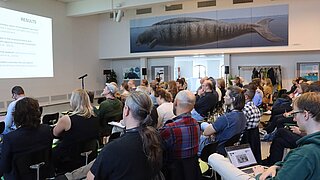
Over 50 stakeholders from across Europe gathered in Brussels to discuss the future of the bioeconomy. Among them: EU Commissioner Jessika Roswall. A joint paper provides food for thought for the upcoming strategy revision.
The European Union is currently preparing to revise its bioeconomy strategy. The updated strategy is set to be published by the end of 2025 – aiming to provide forward-looking guidance for agriculture, forestry, businesses, and rural areas.
As part of the project “Strengthening Civil Society in the Bioeconomy”, funded by the European Environment Initiative (EURENI) and implemented by denkhausbremen e.V. in cooperation with partners FERN and the Estonian Fund for Nature, a central event took place in Brussels on June 12th, 2025. EURENI is carried out by Zukunft – Umwelt – Gesellschaft (ZUG) gGmbH on behalf of the German Federal Ministry for the Environment, Climate Action, Nature Conservation and Nuclear Safety (BMUKN).
EU Commissioner Roswall: Shaping the Future of the Bioeconomy Together
Over 50 participants from civil society, business, science and politics discussed how the new strategy can be designed in an ecologically sustainable and socially balanced way. EU Commissioner for the Environment Jessika Roswall opened the meeting with a keynote speech.
Roswall emphasized the importance of diverse contributions to the bioeconomy consultation. Forests, she noted, provide not only wood, but also water, air and recreational areas. Wood serves as an effective carbon sink, for example in buildings. A successful bioeconomy, she said, requires resilient forests, must honour ecosystem services and should be linked to the EU's Clean Industrial Deal. Another key pillar for keeping biomass in the system for as long as possible is the circular economy, which is also an important economic factor within the EU. Roswall called for practical experience and ideas to be brought into the discussion.
Biomass as a scarce resource
It also became clear in the discussions that the available biological resources are limited and are already being overexploited. Simply replacing fossil fuels with biogenic raw materials is not enough. Instead, the use of biological resources needs to be fundamentally reconsidered—especially considering their finite nature.
According to projections by the Renewable Carbon Initiative and the Bio-based Industries Consortium, for example, the global supply and demand for industrial wood (softwood and hardwood) will increase by around 38% between 2020 and 2050 – from 0.9 to 1.3 billion tonnes of dry matter (M. Carus et al., 2025). This development emphasises the urgency of aligning utilisation concepts for biogenic raw materials with long-term sustainability and resource efficiency.
A revised bioeconomy strategy must therefore reduce the absolute demand for resources and focus on protecting intact ecosystems. The so-called Cascading Principle – prioritising material use of biomass for as long as possible before energetic use – was widely supported. Closing material cycles was also emphasised as a central component of a future-proof bioeconomy strategy.
Criticism of Short-Lived Uses of Wood
As part of the discussions, the use of primary wood for energy purposes was also addressed. Some participants expressed concerns about the efficiency and sustainability of this practice. In this context, it was partly suggested that existing support mechanisms at the European level should be reflected.
At the same time, forestry practitioners from several European countries demonstrated how things can be done differently: nature-oriented forest management, material utilisation of wood, and local value creation. These examples highlighted the importance of rural regions for a sustainable bioeconomy.
Civil Society Gets Involved
To conclude the event, the organizers presented the Commissioner with a joint position paper supported by more than 60 civil society organizations from across Europe and beyond. It offers recommendations on how the EU bioeconomy strategy can be designed to be ecologically sustainable, socially just, and aligned with planetary boundaries.