EURENI project promotes equitable collaboration in the Arctic
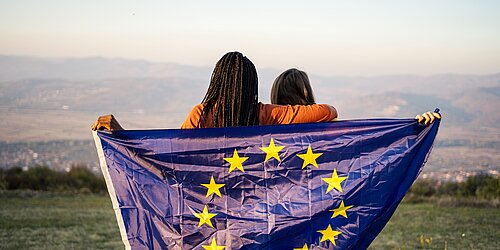
Copyright: Ikaarvik
A new guidance document from the EURENI project NJUOLLA →QARJUK supports the creation of equitable collaborations between Indigenous and non-Indigenous partners in Arctic research, bridging knowledge systems to protect the region.
Indigenous communities have been connected to their territory for generations. It is their land and their livelihood. Indigenous knowledge is therefore particularly valuable for Arctic research, as it enables a deeper understanding of complex relationships, especially ecosystems. Projects achieve better results when all stakeholders contribute their experiences and have an equal role in shaping the research process.
The newly published guidance document shows ways to achieve this. It was developed as part of the project „NJUOLLA →QARJUK: Connecting Best Practices for Co-Created Research across the Arctic“, which is funded by the German Federal Ministry for the Environment in the framework of the European Environment Initiative (EURENI). Zukunft – Umwelt – Gesellschaft (ZUG) gGmbH is the responsible project management agency.
Rethinking Arctic research
The colonial history of Arctic research continues to shape the relationship between university researchers and Indigenous communities to this day. Against this background, the guidance aims to enable collaborations that are fair, equitable, and serve the interests of Indigenous communities.
Researchers are encouraged to critically examine their own position, their goals, and their institutional affiliations. Guiding questions support them in reflecting upon the historical and cultural background of their work, rethink their approach, and engage with Indigenous communities in an equal partnership.
The document emphasizes that building trust requires time, commitment and resources. Trust-based relationships develop over time, when they are grounded in respect for local perspectives and ways of working. The key is involving community members – such as elders, youth, and knowledge holders – in all stages of the research process.
Another focus is on data sovereignty: The guidance highlights that Indigenous communities themselves should decide how data about their lands, lives and knowledge is to be collected, stored and shared.
Project background
The NJUOLLA->QARJUK project is carried out by the RIFS Research Institute for Sustainability in partnership with the Saami Council and Ikaarvik. Ikaarvik is an Indigenous-led organisation in the Canadian Arctic. It strengthens the participation of Indigenous youth in Arctic research and decision-making. The Saami Council is a voluntary organization that promotes the rights and interests of the Saami people across Northern Europe.
NJUOLLA->QARJUK builds on the work of its predecessor, DÁVGI, which pioneered the co-creative approach: Indigenous and non-Indigenous partners jointly developed the methods and processes of their collaboration and published their results on the cocreatearctic.org platform.
The current project aims to make those insights available to the Arctic research community: It compiles a database with existing collaboration guidelines developed by Indigenous communities. And it has published the guidance document, to serve as a basis for other project teams to develop fair and equitable research relationships themselves.
New collaboration for marine conservation
The results from DÁVGI and NJUOLLA->QARJUK strengthen research and conservation projects in the Arctic. They have enabled partnerships and produced insights that continue to have an impact. One example is the new SIEMA project: Together with Indigenous partners, it explores ways to strengthen marine conservation across the Arctic, focusing on the needs of local communities.